
Retail strips and offices
Single-story strip centers, office buildings and medical offices with TPO, EPDM or modified bitumen roofs, rooftop HVAC units and tenants who need to stay open during work.
A free quote service for commercial buildings. Describe the roof once and independent, Illinois-licensed commercial roofing contractors serving Champaign-Urbana can reply with no-obligation quotes for repair, replacement, coatings or maintenance.
Elite Champaign Commercial Roofers is not a roofing contractor. It connects the people responsible for a building with independent contractors who do commercial roofing work. Typical requests come from:
Single-story strip centers, office buildings and medical offices with TPO, EPDM or modified bitumen roofs, rooftop HVAC units and tenants who need to stay open during work.
Large low-slope roofs in the industrial areas around Champaign, Rantoul and Danville, where a small leak over inventory or equipment gets expensive fast.
Older masonry buildings with parapets, mixed roof sections and boards or committees that need comparable written bids before they can vote.
Multi-family buildings of 9 or more units, which in Illinois need a contractor with an unlimited roofing license, plus associations planning a reserve-funded replacement.
Post-frame and steel buildings across Champaign, Piatt, Douglas and Vermilion counties, including metal roof repair, retrofit and coatings.
Two- and three-story brick buildings in downtown Champaign, Campustown and downtown Urbana, often on built-up or modified bitumen roofs that have been patched for years.
Each guide covers when that work makes sense, typical national price ranges, what is specific to Champaign's weather and codes, and what to ask contractors before you sign.
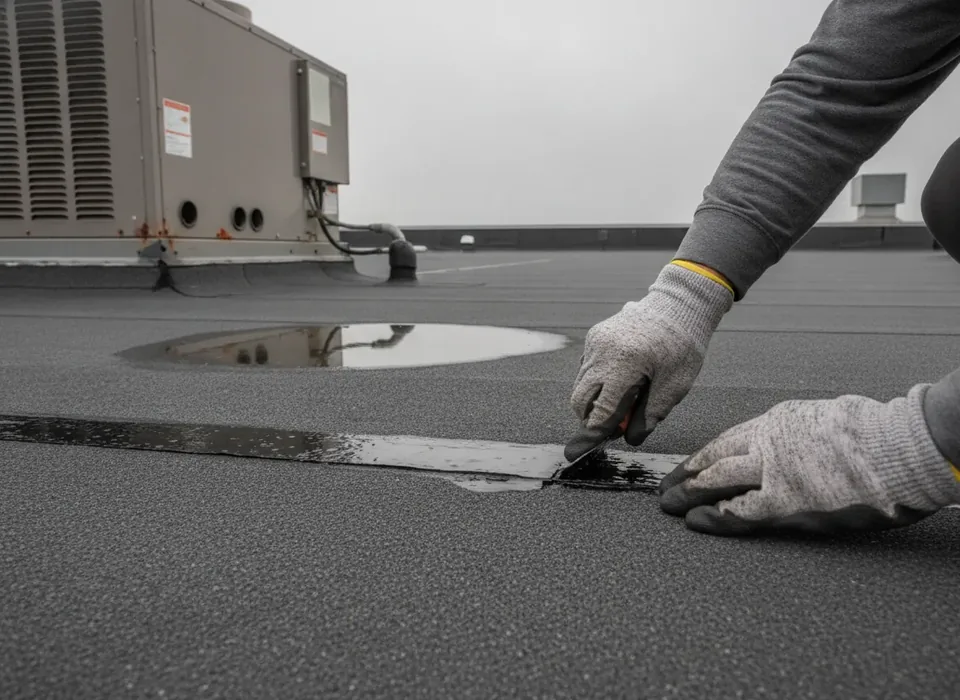
Leak tracing, seam and flashing repairs, and drain and penetration fixes on flat and low-slope roofs.
Learn more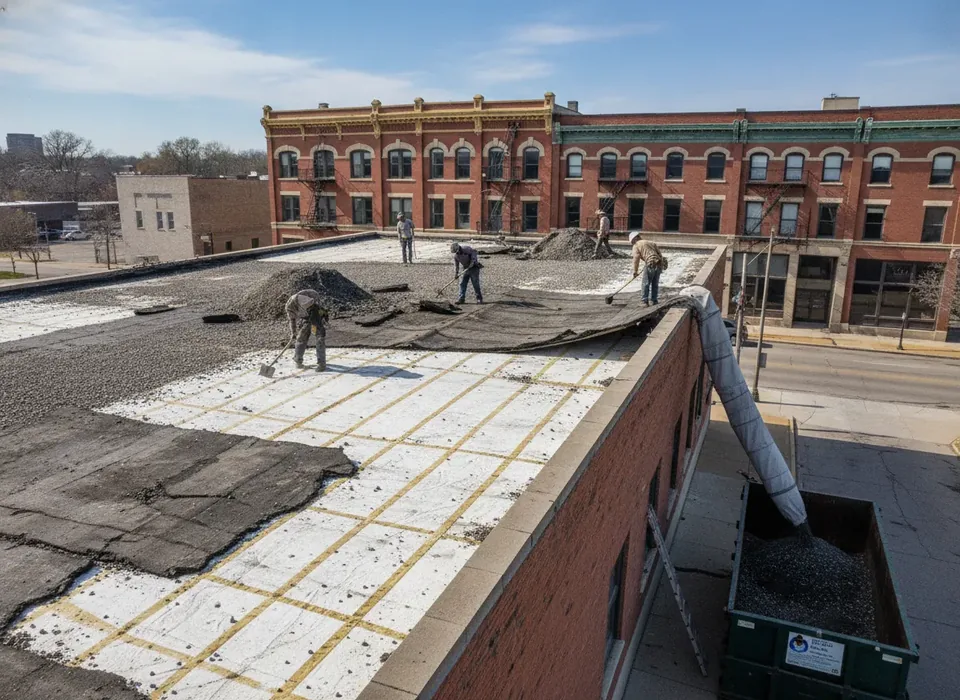
Tear-off versus recover, the two-layer rule, energy-code insulation and permits.
Learn more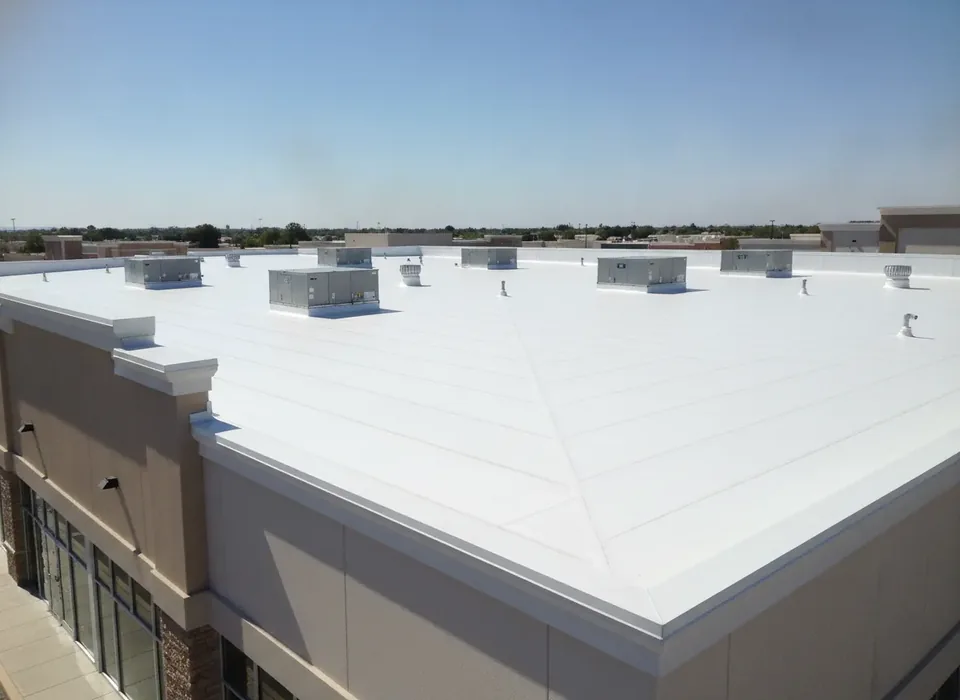
White single-ply membranes common on retail, office and warehouse roofs, and how PVC compares.
Learn more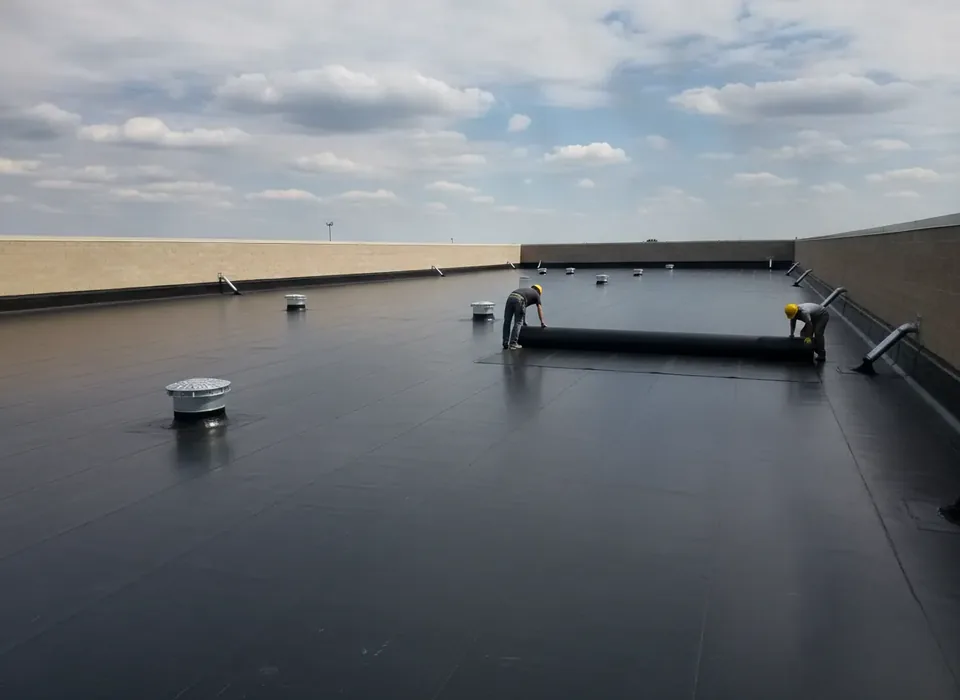
Black rubber roofs: repair, recover and full replacement on the large installed base around C-U.
Learn more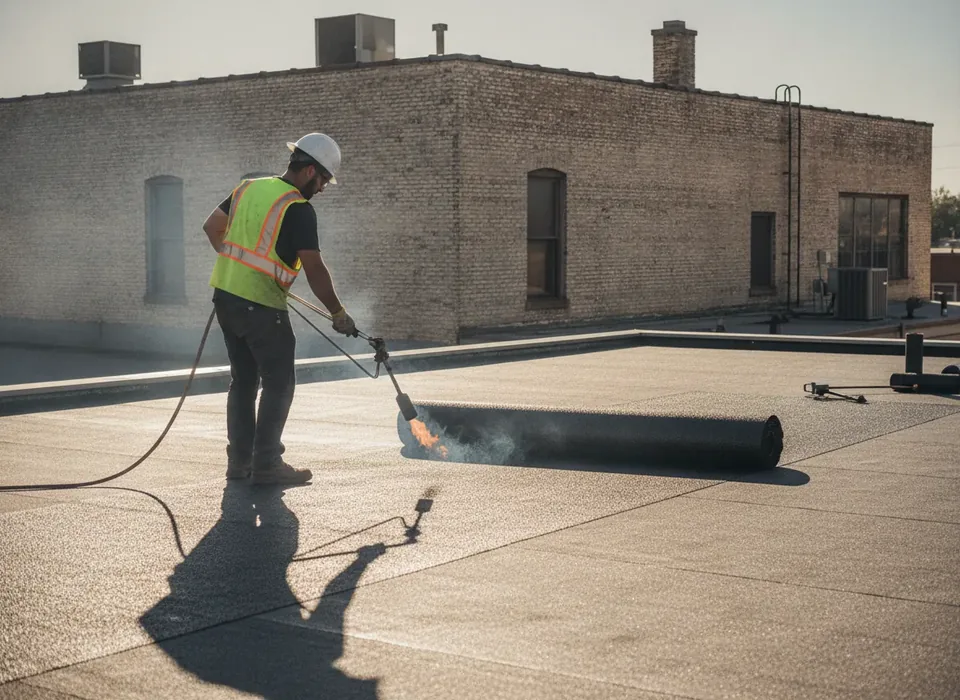
Multi-ply asphalt roofs found on older downtown, campus-area and institutional buildings.
Learn more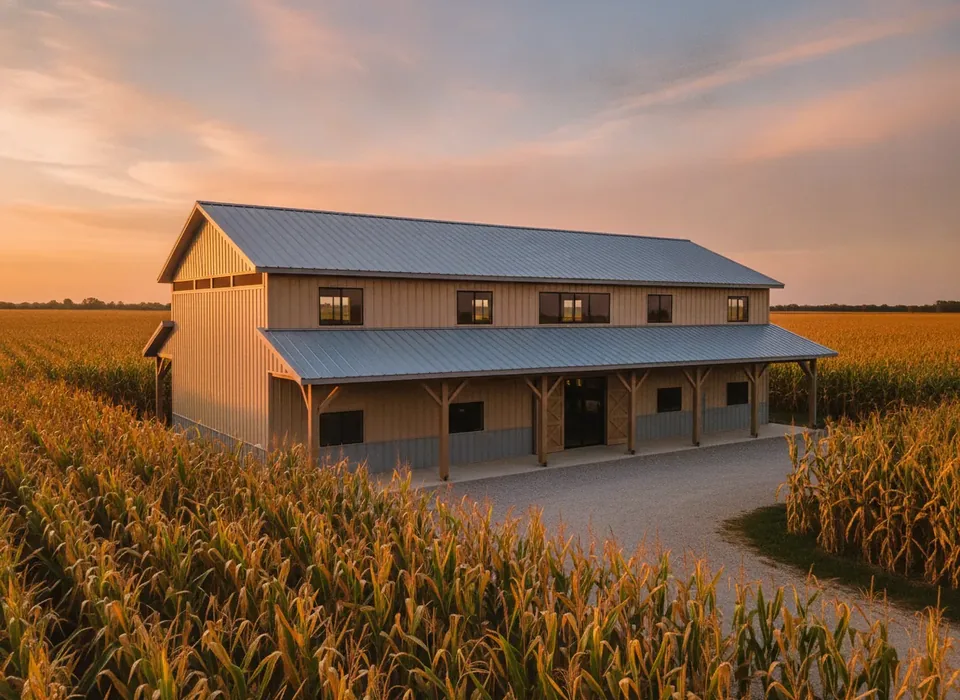
Standing seam, through-fastened panel repair and metal-over-metal retrofit for industrial and ag buildings.
Learn more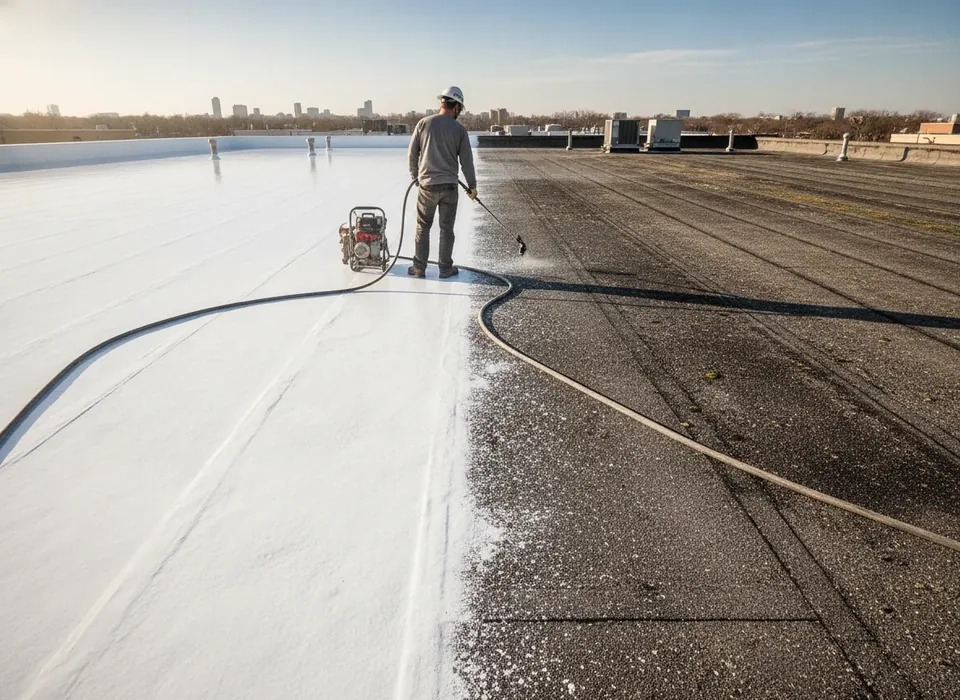
Silicone and acrylic coatings that can extend a sound roof's life for less than a replacement.
Learn more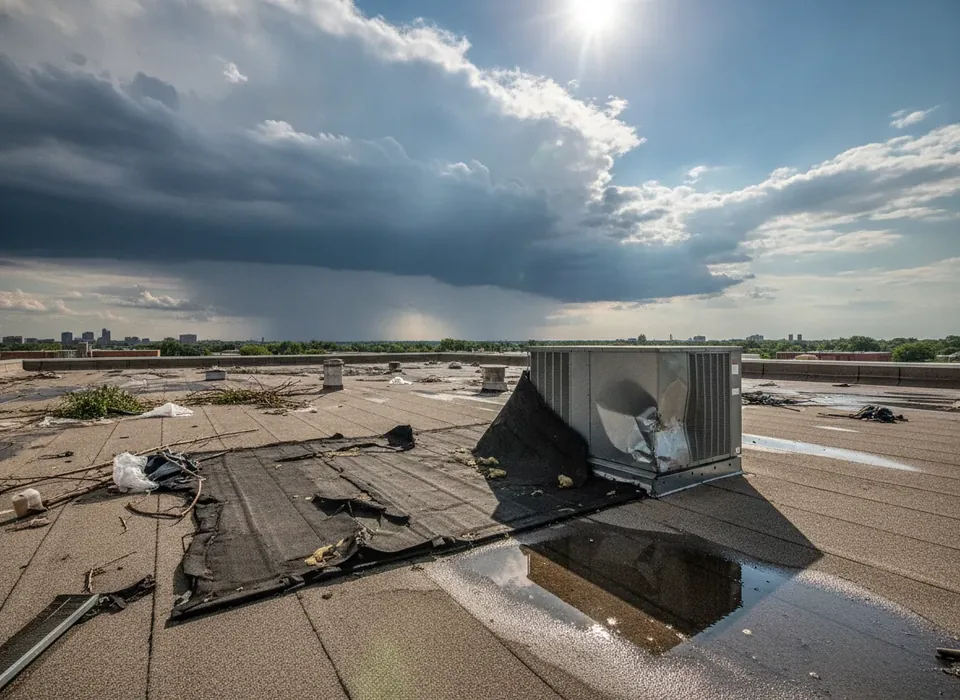
Wind and hail damage documentation, temporary protection and permanent repairs after a storm.
Learn more
Spring and fall inspections, post-storm checks and condition reports for capital budgeting.
Learn moreThree steps. You hire the contractor directly; Elite Champaign Commercial Roofers is not a party to the contract.
Building type, rough roof size, the current roof if you know it, and what is happening: a leak, storm damage, an aging roof or a budget you need to plan. The form takes about two minutes, or call Call (727) 300-6656.
Independent commercial roofing contractors serving your area receive the request and contact you to schedule a roof visit and quote. Response times are set by each contractor.
Look up each contractor's license at idfpr.illinois.gov, compare scope, insulation and warranty line by line, and hire the one you trust. No fee, no obligation. See the full commercial roofing process.
National cost guides put most low-slope systems at roughly $4–$14 per square foot installed for TPO, $3–$13 for EPDM and $4–$8 for modified bitumen. Metal runs about $7–$15, and a silicone coating over a sound roof about $1.50–$4.50. A full tear-off adds roughly $1–$5 per square foot.
On a 10,000-square-foot roof, that is the difference between a five-figure coating and a six-figure replacement. Insulation, drainage changes, HVAC curbs and access move the number more than the membrane does.
Typical national ranges (Fixr Jan 2026, ServiceTitan Feb 2026, Angi/HomeAdvisor 2025). Champaign bids vary.
Most flat roofs in East Central Illinois do not fail all at once. They wear at the seams, the flashings and the drains, and then one storm or one winter finds the weak spot.
Champaign-Urbana averages about 23 inches of snow a year, most of it in December and January, per the Illinois State Climatologist. Snow melts on a sunny afternoon and refreezes overnight in drains, scuppers and the low corners behind parapets. Repeated cycles open seams and flashing laps and crack the surface of older built-up and modified bitumen roofs.
The August 10, 2020 derecho brought gusts of 62 mph near Urbana and 60 mph at Willard Airport, and 75 mph in Danville, according to the National Weather Service. On March 30, 2025, Willard recorded a 68 mph gust and an EF-1 tornado ran from near Ivesdale to just north of Tolono. NWS Lincoln counts 87 tornadoes in Champaign County from 1950 to 2025. Wind lifts membrane at the perimeter and corners first, where edge metal and fastening matter most.
The State Climatologist's long-term figure is about 2.2 hail days a year at Urbana. Hail bruises modified bitumen, fractures aged single-ply membranes, dents metal panels and damages HVAC fins and skylights. Most of it cannot be seen from the parking lot. More on storm and hail damage.
The National Roofing Contractors Association treats water as ponding when it is still there 48 hours after rain stops. Clogged drains, deflected decks and settled insulation are the usual causes, and ponding can void a membrane warranty. Tapered insulation at replacement is the standard fix.
Downtown Champaign, Campustown and downtown Urbana have many older masonry buildings with flat roofs and parapets. University of Illinois figures show more than one-fifth of its academic facilities are 75 years or older. Older roofs often have several layers, which limits recover options. See commercial roof replacement.
After a big storm, out-of-town crews knock on doors and leave flyers. IDFPR warns property owners about door-to-door and out-of-state roofers who are not licensed in Illinois. Before you sign anything:
Quote requests are open across Champaign and nearby East Central Illinois communities in Champaign, Vermilion, Douglas and Piatt counties.
No. Elite Champaign Commercial Roofers is a free quote service. You describe the building and the roof problem once, and independent commercial roofing contractors serving Champaign-Urbana can reply with quotes. Those contractors do the inspection and the work, and you sign a contract with them directly. There is no fee to you and no obligation to hire anyone who replies.
National cost guides put most low-slope systems between about $3 and $16 per square foot installed: TPO $4–$14, EPDM $3–$13, PVC $5–$16, modified bitumen $4–$8, built-up $4–$12 and metal $7–$15. A tear-off adds roughly $1–$5. Champaign bids vary with insulation, access and flashing work. See the cost guide and calculator.
An unlimited roofing license from the Illinois Department of Financial and Professional Regulation (IDFPR). A limited license covers only residential buildings and condo buildings of eight units or fewer, so it does not cover commercial, industrial or larger multi-family roofs. License numbers start with 104-, and you can look one up at idfpr.illinois.gov.
Generally yes. Champaign handles building permits through the Fire Department's Building Safety Division and enforces the 2021 International Codes and the 2021 Illinois Energy Conservation Code. Minor repairs may not need one. Urbana, Savoy and the county run their own departments, so requirements vary. The contractor you hire normally pulls the permit.
Sometimes. A recover (new membrane over the existing roof) is not allowed under the 2021 International Building Code when there are already two or more roof coverings, or when the existing roof or insulation is wet or deteriorated. A moisture survey and core cuts tell a contractor whether a recover is an option on your building.
Twice a year is the usual recommendation, typically spring and fall, plus after any major wind or hail event. In Champaign that fall visit matters: clearing drains and resealing flashing before freeze-thaw season starts prevents a lot of winter leaks. See inspections and maintenance plans.
Describe the building once and independent, Illinois-licensed commercial roofing contractors can reply with no-obligation quotes.